
Or, what you should know about Horace Mann and the history of American public schools
“We need to fix public schools!” Have you ever heard (or said) this? It’s very common in an age of public school problems like low test scores, sexual indoctrination, and high taxes. It’s normal to want to go back to a better time, to reform education. But what if I told you that public education is following its natural course from its original founding?
Horace Mann is well-known as the Father of Public Education. It’s important, when discussing public education, to understand Horace Mann. And the best way to understand is by his own words.
Horace Mann lived from 1796-1859. He grew up in a typical New England Protestant/Calvinist home, but rejected that upbringing in his teens. He was not formally educated, but was self-taught until he attended college. His lack of early education seems to have influenced his life’s work.
In a series of 12 annual reports, Mann made his case for forced taxation, utopia through education, and religion without Christianity. Let’s examine some of them.
Marxist before it was cool
While he said many true things about the importance of education, he viewed all of life through the lens of a collectivist. Collectivism is the doctrine that land and capital should be owned by society collectively or as a whole; or communism. Mann repeatedly attacked capitalism in his writings. He was also a humanist: he believed that people are basically good, and that an organized system of schools could bring out the good in everyone.
In his mind, Utopia could be achieved through his system of “common schools.” In The Republic and the School, author Lawrence A. Cremin sums up Mann’s ideology:
His effort was to use education to fashion a new American character out of a maze of conflicting cultural traditions. And his tool was the common school…Once common schools had been established, there was no social evil which could not be attacked by their beneficent influence. Universal education could be the great equalizer of human conditions, the ‘balance wheel of the social machinery,’ and the ‘creator of wealth undreamed of’ (12th annual report). Poverty would most assuredly disappear as a broadening popular intelligence tapped new treasures of natural and material wealth. Along with poverty would go the rancorous discord between the haves and the have-nots which had characterized all of human history. Crime would decline sharply, as would a host of moral vices…(11th annual report). The ravages of ill health would most certainly abate (6th annual report). In sum, there was no end to the social good which might be derived from the common school. Here then was a total faith in the beneficent power of education to shape the future of the young republic…
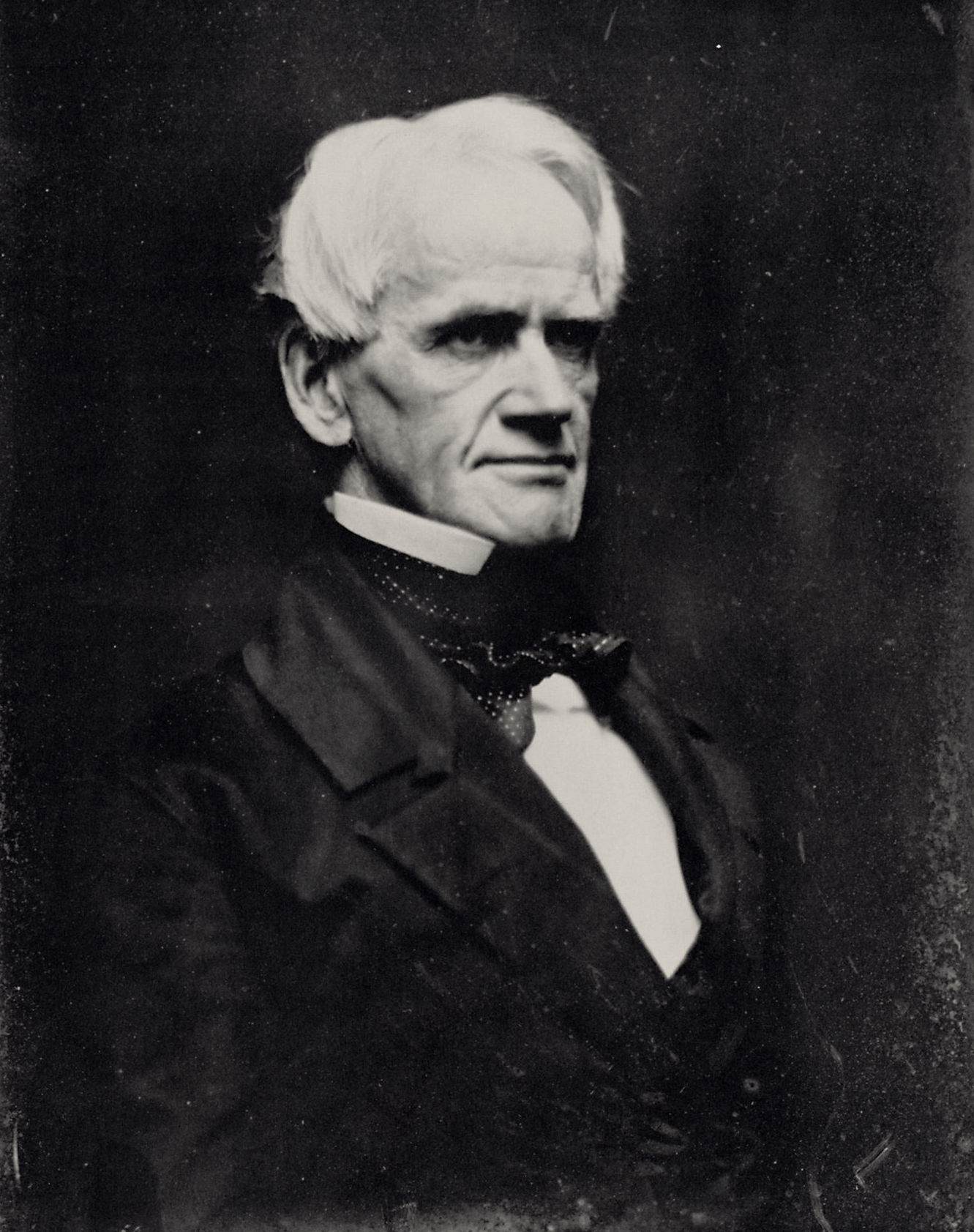
In a series of 12 annual reports, Mann made his case for forced taxation, utopia through education, and religion without Christianity, and his opinion that those who opposed him were greedy capitalists:
I believe that this amazing dereliction from duty [to provide free public school] especially in our own country, originates more in the false notions which men entertain respecting the nature of their right to property, than in anything else. In the district school meeting, in the town meeting, in legislative halls, every where, the advocates for a more generous education could carry their respective audiences with them in behalf of increased privileges for our children, were it not instinctively foreseen that increased privileges must be followed by increased taxation…It seems not irrelevant, therefore, in this connection, to inquire into the nature of a man’s right to the property he possesses, and to satisfy ourselves respecting the questions, whether any man has such an indefeasible title to his estates, or such an absolute ownership of them, as renders it unjust in the government to assess upon him his share of the expenses of educating the children of the community, up to such a point as the nature of the institutions under which he lives, and the well-being of society require. (Tenth Annual Report, 1846)
Karl Marx said it this way: …the theory of the Communists may be summed up in the single sentence: Abolition of private property. (Communist Manifesto, Chapter II. Proletarians and Communists)
Non-sectarian religion
As a humanist, Mann envisioned a world where a great society was possible, separate from Christianity. Despite 200 years of historic proof that the American colonists had thrived within the boundaries of the Christian religion, he couldn’t see it (or chose not to). He strongly believed in the republican system of government set up by the american founders, but he felt that it was easily separated from its Judeo Christian heritage. “Never will wisdom preside in the halls of legislation and its profound utterances be recorded on the pages of the statute book, until Common Schools…shall create a more far-seeing intelligence and a purer morality than has ever existed among communities of men.” This statement is categorically false; the history of the United States up until the time this statement was made (1848) was heavily influenced by the morals from the Bible and a lack of any school standards.
Cremin’s book explains it this way: “...universal popular education is the only foundation on which republican government can securely rest.”
But the actual founders of our republic had a very different idea:
- It is impossible to rightly govern a nation without God and the Bible. (George Washington)
- The Declaration of Independence laid the cornerstone of human government upon the first precepts of Christianity. (John Adams)
- The right to freedom is the gift of God Almighty….The rights of the Colonists as Christians may be best understood by reading, and carefully studying the institutes of the great Lawgiver and head of the Christian Church: which are to be found clearly written and promulgated in the New Testament. (Samuel Adams)
- The only means of establishing and perpetuating our republican forms of government is the universal education of our youth in the principles of Christianity by means of the Bible. (Benjamin Rush)
Before Mann spread his gospel of public education, the beliefs of the founding fathers were commonly shared throughout the states.
Mann also speaks boldly on his belief in the “absolute right of every human being that comes into the world to an education;” for the “civil and social duties he will be called to discharge.” The UN agrees.
In this same report, Mann goes on to to say that this is a mandate from God:
The will of God, as conspicuously manifested in the order of nature, and in the relations which he has established among men, places the right of every child that is born into the word to such a degree of education as will enable him, an, as far as possible, will predispose him, to perform all domestic, social, civil, and moral duties, upon the same clear ground of natural law and equity, as it places a child’s right upon his first coming into the world, to distend his lungs with a portion of the common air, or to open his eyes to the common light, or to receive that shelter, protection, and nourishment which are necessary to the continuance of his bodily existence…to demand of the possessors of property their respective shares for the prosecution of this divinely-ordained work, that they themselves are guilty of the most far-reaching injustice, who seek to resist or to evade the contribution.
Horace Mann rejected Christianity in moral education, but uses God to impose a guilt trip on people for owning property. He cites no scripture for this claim, because he can’t.
This is followed by several pages of the descriptions of natural resources, and equating them with the wealth that people create, in order to say that the wealthy have stolen what they have. “They [natural resources] were created for the race, collectively, but to be possessed and enjoyed in succession, as the generations, one after another, should come into existence; equal rights with a successive enjoyment of them!..and no one man, nor any one generation of men has any such title to, or ownership in, these ingredients of all wealth, that his right is invaded when a portion of them is taken for the benefit of posterity [taxation].” Many paragraphs are devoted to the natural elements, such as the wind, the sun, the water, even a knowledge of agriculture as a comparison to the wealth created by these natural resources. “But sometimes, the rich farmer, the opulent manufacturer, or the capitalist, when sorely pressed with his legal and moral obligations, to contribute a portion of his means for the education of the young, replies, “My lands, my machinery, my gold and my silver, are mine; may I not do what I will with my own?”
The society of which we necessarily constitute a part, must be preserved; and in order to preserve it, we must not look merely to what one individual or family needs, but to what the whole community needs; not merely to what one generation needs, but to the wants of a succession of generations.”
Yes, we should look to the needs of our family and our neighbors. This is one of the greatest commandments that Jesus highlighted: “love your neighbor as yourself.” But Jesus was not speaking of forced taxation. It is our duty as Christians to love our neighbors and care for those in need.
Man “came to increasingly believe that certain common principles could be culled from the several sectarian creeds and made the core of a body of religious doctrine on which all could agree.” (Cremin) This is known as syncretism, the process by which aspects of one religion are assimilated into, or blended with, another religion. This leads to fundamental changes in both religions. (Ligonier Ministries)
Mann equated a parent providing for his child with the government taking your property and dividing it with a fantastical mix of biblical parenting with government socialism. “In obedience to the laws of God and to the laws of all civilized communities, society is bound to protect the natural life; and the natural life cannot be protected without the appropriation and use of a portion of the property which society possesses.”
And even worse:
“We are brought then to this startling but inevitable alternative. The natural life of an infant should be extinguished as soon as it is born, or the means should be provided to save that life from being a curse to its possessor; and therefore every State is bound to enact a code of laws legalizing and enforcing Infanticide, or a code of laws establishing a Free School.”
Gosh. Give them public school or give them death.
“…the overwhelmingly Protestant people of MA seemed willing to go along with him, once he had fought and defeated the more vigorous sectarian among them.” (Cremin)
This should serve as a cautionary tale.
Distaste for private education
Mann sough to equalize every child. The children of wealthy families must, in his opinion, be educated with the families of poorer children. The strict Protestant parents must lower their standards to assimilate with the rest of the world. In his First Annual Report (1837), he made the case for standardizing all of education. Never mind if the common school was not producing adequate results; everyone should use it to level the playing field.
“Were their funds and their interest combined, the poorer school might be as good as the best; and the dearest almost as low as the cheapest.
Some few persons in a village or town, finding the advantages of the common school inadequate to their wants, unite to establish a private one. They transfer their children from the former to the latter. The heart goes with the treasure. The common school ceases to be visited by those whose children are in private. Such parents decline serving as committee men. They have now no personal motive to vote for or advocate any increase of the town’s annual appropriation for school; to say nothing of the temptation to discourage such increase in indirect ways, or even to vote directly against it. If, by this means, some of the best scholars happen to be taken from the common school, the standard of that school is lowered. The lower classes in a school have no abstract standard of excellence, and seldom aim at higher attainments than such as they daily witness… All of this inevitably depresses and degrades the common school. Thus, another blow is dealt; then others escape; action and reaction alternate, until the common school is left to the management of those, who have not the desire or the power either to improve it or to command a better…”
He goes on:
“Amongst any people, sufficiently advanced in intelligence, to perceive, that hereditary opinions on religious subjects are not always coincident with the truth, it cannot be overlooked that the tendency of the private school system is to assimilate our modes of education to those of England, where churchmen and dissenters, — each sect according to its own creed, — maintain separate schools, in which children are taught, from their tenderest years to wield the sword of polemics with fatal dexterity; and where the gospel, instead of being a temple of peace, is converted into an armory of deadly weapons, for social, interminable warfare. Of such disastrous consequences, there is but one remedy and one preventive. It is the elevation of the common schools.”
Enter the German public school.
The Prussian model of education
Horace Mann studied law, and served in the MA House of Representatives and then the MA Senate. But when the state created a Board of Education in 1837, he served as its first president. He traveled the state, speaking and writing extensively on the power of public schools, during which time he published his Twelve Annual Reports. In 1843, he traveled to Europe to observe education. The Prussian method of public education intrigued him, and that is what he imposed on the children of Massachusetts, and the rest of America.
Prussia (Germany) in the 1840s was reeling from the defeat of the Prussian army by Napoleon Bonaparte’s forces in 1806. A philosopher named Johann Fichte rose to fame and influence in the Prussian culture. He was obsessed with the idea of a new education, one that would create nationalism (as opposed to individualism): “It follows, then, that the means of salvation which I promise to indicate consists in the fashioning of an entirely new self, which may have existed before perhaps in individuals as an exception, but never as a universal and national self, and in the education of the nation. By means of the new education we want to mould the Germans into a corporate body, which shall be stimulated and animated in all its individual members by the same interest.”

Provincial map of Prussia in 1840 by Minkshaming on DeviantArt
Fichte believed that, “Education should aim at destroying free will so that after pupils are thus schooled they will be incapable throughout the rest of their lives of thinking or acting otherwise than as their school masters would have wished.”
The Prussians had been defeated, he said, because of their inability to be a controllable, cohesive unit. Fichte argued for a classless, compulsory, universal education for all Prussian children that would produce a new generation of citizens who could be more readily controlled. Standardized formal academics were required, along with a strict education in ethics, duty, discipline, and obedience.
In 1852, under Governor Edward Everett, Horace Mann and Massachusetts adopted this Prussian model to the state’s education system. Mann finally had a formula with which to impose his hope of Utopia through compulsory education. By the end of the 19th century, all of the states in America had adopted the Prussian model of education.
What exactly are we hoping to fix?
Our schools are, in a sense, factories, in which the raw products (children) are to be shaped and fashioned into products to meet the various demands of life. The specifications for manufacturing come from the demands of twentieth-century civilization, and it is the business of the school to build its pupils according to the specifications laid down. (Edward Cubberley, 1916; “Public School Administration: A Statement of the Fundamental Principles Underlying the Organization and Administration of Public Education”)
Follow the history of Germany, and you can see some pretty disastrous effects of its factory model of education. Karl Marx was crafting his communist ideology at the same time Fichte was revolutionizing German education. It’s no surprise that by the 1930s, a man like Adolf Hitler would find it so easy to control the Germans; they had been trained for generations to ignore critical thinking and to unquestioningly obey authority. They were taught from childhood to reject individuality. They had been trained in nationalism, so national socialism, (from which they coined the term Nazi), was the natural next step.
Do you know what else we got from Prussia? The Frankfurt School, and the origin of Critical Theory.
American public schools are functioning exactly as they would be expected to, based on the factory model from Prussia. In Prussia, the idea of loyalty to the state had been cemented long before Fichte came along and created a school system around it. In America, however, this same model lagged about 100 years behind Germany, thanks to our Republican form of government. Americans have long been an individualistic people, capitalistic, and lovers of freedom. The decline was a slow one.
The only “fix” for American education is one where the government plays no part. Not the state. Not the federal government. That’s exactly what made America great. Private education and home education, privately funded, are the only means to truly reforming education. Otherwise, we’re just turning back the clock a few decades to a nicer version of the socialist factory model that Horace Mann created.
Read more:
If you appreciate what I do here, you can support me with a donation of any size, or shop my history book collection.


Leave a Reply